

Alejandra Becerra: Milpa


What do you like about the Milpa and why did you want to grow them in the Living History Gardens?
Alejandra Becerra: What I like about the milpa is that it is a community of crops all growing together and helping each other thrive in what could appear as an unruly environment. I wanted to grow it in the heritage garden because the elements of what make up a milpa make up the most essential parts of my culture’s diet. Though farming has survived in some of the branches of my family tree, my immediate living family has little to no knowledge of how to grow what they eat. I want that to stop with me. My hope is that I can learn and teach the younger generations of my family. I want them to at least have a little sense of the magic that happens when you care for tiny seeds that grow to be eight feet tall!

Your corn is huge! What was it like growing at McAllister Ranch? Have you grown them before?
Alejandra Becerra: Growing at McCallister ranch was amazing and I am so happy to have had the opportunity to grow there. So thank you! There is no way the crops would look as beautiful as they do if it wasn’t for all of the land tending/prep work you guys have done. It seems you did everything you could think of to make sure the heritage garden was a place our crops would thrive. Also, having a space that is so accessible & welcoming paired with your willingness to share resources & your family is much appreciated. That is something that is not always true of so-called community spaces. I am also grateful for everyone’s help watering the crops. This is my first summer ever planting beans and corn of any kind and seeing it through. I had no idea what to expect and have been learning as I go.

How are these foods typically grown and cooked by your family?
Alejandra Becerra: The relatives that I have that grow corn and still have land have mainly turned to producing corn for animal feed. However, when we can go harvest to eat corn from their crops, it usually involves a day at the field where we roast corn and spend the day with the land. My moms favortie thing to cook is pozole. My aunt makes really great “pan de elote” which is corn bread, but I don’t know what she does to it that makes it taste so good. Sometimes we add mayo, cheese and chili to the corn. Other times we make chaskas, which is what we call corn in a cup? But otherwise corn, beans, squash, and quelites are used in everything we eat.

Tell us a little about your family’s story.
Alejandra Becerra: As far back as I can trace my family, we have always been in the Aguascalientes, Jalisco, Zacatecas, San Luis Potosí, region. This region is a semi arid region in the middle/ eastern part of Mexico. The crops there depend heavily on the rain as a lot of the ranches don’t have running water. My family worked as peons at various haciendas in Aguascalientes. Around the 1920’s, when the agrarian reform happened, they became ejidatarios. My grandfather was an ejidatario but lost the rights to his land eventually because he left the ranch and took my mom and her oldest siblings to live in the city in the 1960’s. He did not want to work the land, he wanted to be a city boy. Haha. I was born in the city of Aguascalientes, Mexico. My mom and a few of her siblings were the first generation to migrate to the United States. We ended up in Flagstaff because one of my uncles had a friend who found him work here. My daughter was born in Flagstaff. I don’t know that my mother’s American dream was to have an underemployed daughter who just wants to grow food LOL, but that's what she’s got. I’ve always thought that us ending up in Flagstaff of all places was so random.
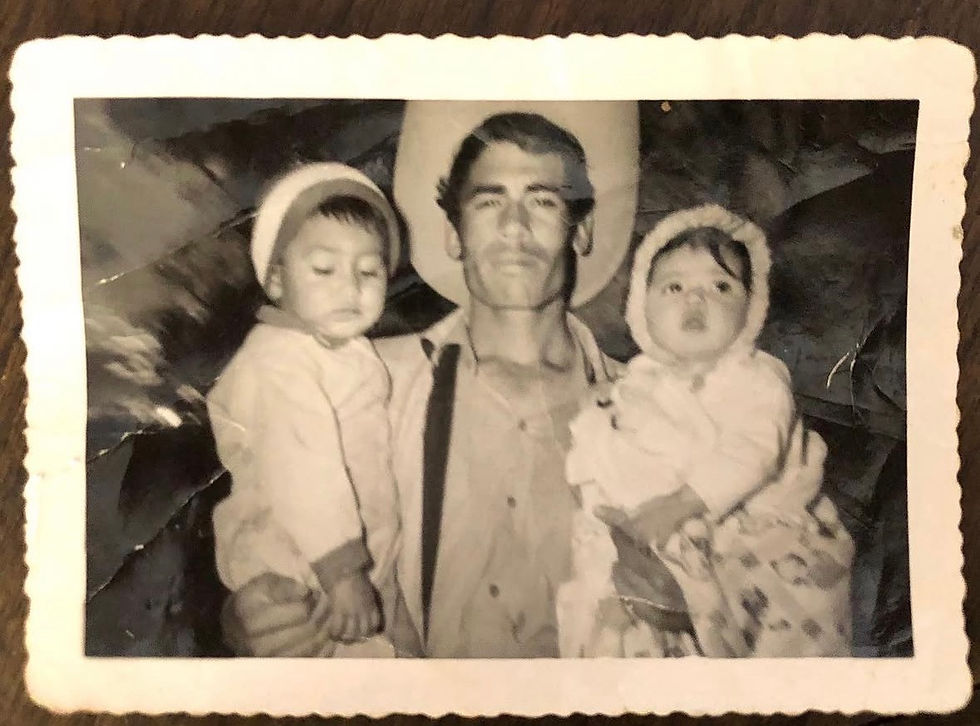
Is there a member of your family who inspired your connection to growing and eating Three Sisters or from the Milpa?
Alejandra Becerra: I honestly think the inspiration I got from my living immediate family came in the form of frustration about them not knowing how to grow food, or much of our family history. But through conversations with my grandfather’s family I’ve learned that growing food and tending to crops has been a part of our family history since Aguascalientes was colonized. Our last name is Becerra, which means calf, and it is likely we got this last name because our family was assigned to raise cattle. A lot of my inspiration to grow and learn about the milpa comes from people I’ve been in community with. Growing up around indigenous people who are still so connected to their traditions and their land sparked the curiosity about the history of where my family comes from & our traditional food ways. Not too many generations ago my family’s entire life was shaped around agriculture. Even though I did not know them in their living form, I think their essence is also the reason I felt inspired to grow a milpa.

Anything else you want to share?
Alejandra Becerra: My dream milpa would include so many things I am not able to grow in Flagstaff. Like nopales and all sorts of quelites. That makes me a little sad, but I love what the land here has to teach me as well.


Comments