

Amy Darte: Polish Independence Bean


What do you like about these Polish beans and why did you want to grow them in the Living History Gardens?
Amy Darte: When I learned about the living history gardens, I had recently started learning Polish with my kids. My grandma had taught me a single Polish phrase when I was little, and I had never looked it up to confirm it was even correct. So when I taught the same phrase to my kids, we decided to learn some more. With the Polish side of my family on my mind, I then started the task of looking for Polish seed varieties, and I was drawn to these beans because they had a really good backstory (and I happened to find one seller in the US to get the seeds!).
Why are these beans called “Independence” beans? What is their story?
Amy Darte: When my research of Polish seed varieties led me to the Polska Fasola z Orzełkiem, the Polish Eagle Bean or Independence Bean, I was thrilled, because its story is one of resistance. The bean itself is white and has a red eagle shape on it, reminiscent of the Polish coat of arms. It is said that when Poland lost its sovereignty during the partitions that spanned the 1800’s, these beans were secretly grown, hidden among potato crops, as an act of resistance against their occupation (we added two potato plants to our bed for this reason). These beans were served at Christmas as a demonstration of quiet patriotism. Just finding these seeds taught me so much I didn’t know about Poland’s history. These bush beans are supposed to be stout, hardy, and easy to grow.

The other beans I found were Piękny Jaś, or Handsome Johnny Beans, allegedly one of the most popular beans in Poland. It’s a bean that is so tied to the terroir that it received Protected Designation of Origin status by the EU. Flagstaff is practically the opposite conditions of their home region, so I was excited to see if they’d grow here. Luckily, they don’t seem to mind the change at all!
What was it like growing these beans at McAllister Ranch? Have you grown them before?
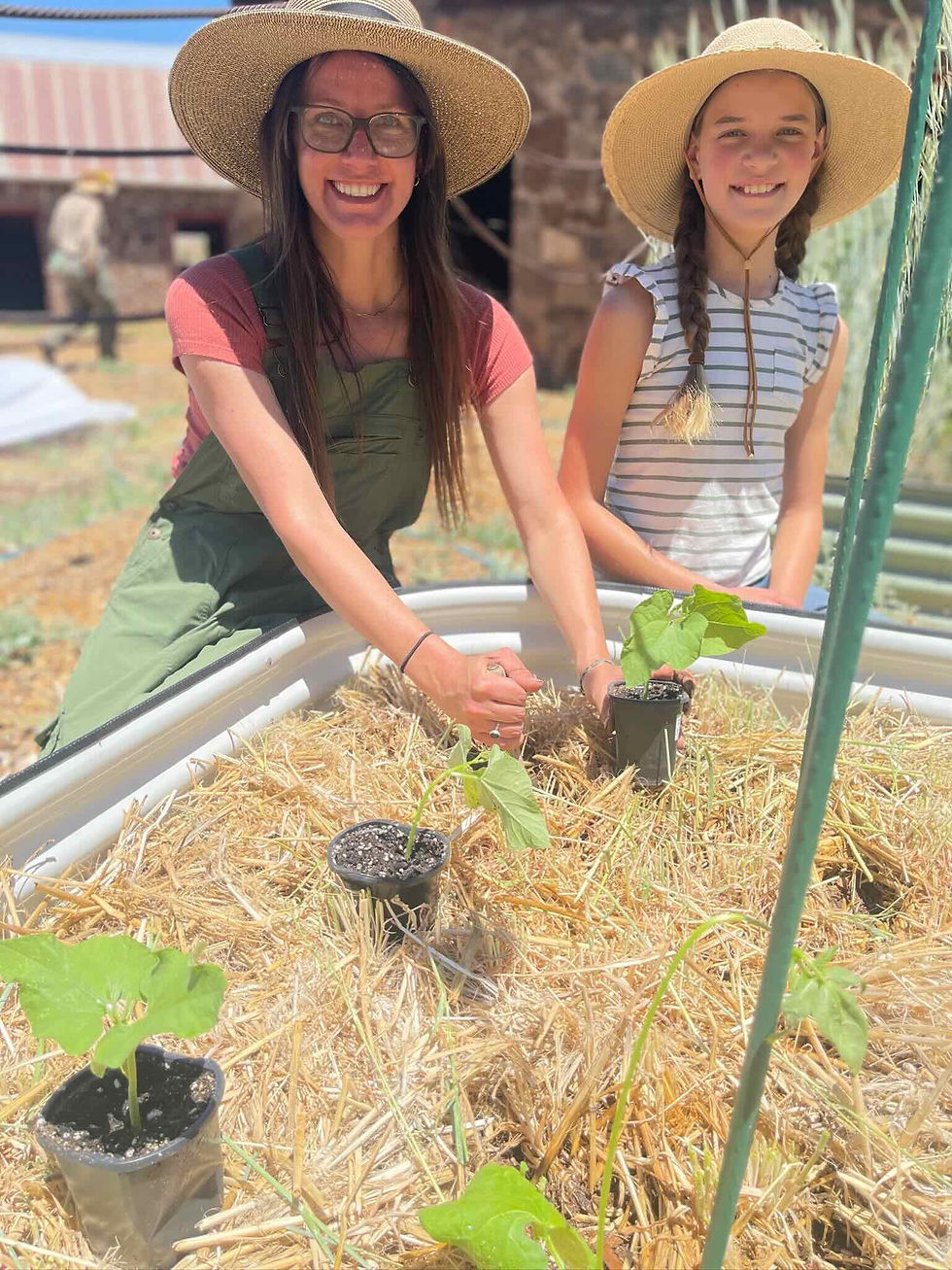
Amy Darte: This was my first time growing both of these varieties, and they THRIVED! I have enjoyed the community and atmosphere at McAllister immensely. What I loved most, however, was that my daughters got very interested in the project too, and it really did become a way to go beyond paper records and connect them with our ancestry in a more memorable way. It was my daughter’s idea to name our beans, so we filled the beds with our Polish ancestors’ names. <3
Tell us a little about your family’s story.
Amy Darte: Overall, I have a lot of mixed ancestry, but my grandma was of solidly Polish descent. My great-grandfather immigrated through Ellis island in 1907. We lost my grandmother when I was young, so I missed out on a lot of the cultural knowledge she carried besides dancing the Polka at weddings and a few foods. Over the years, I have researched and taught myself a few Polish recipes as a nod to my grandma. But even as an avid gardener, I never thought to grow Polish vegetable varieties until hearing about this project and immediately went searching online to see what I could find!
What was your Grandmother like? Do you have any favorite memories of her?
Amy Darte: My Grandma Irene died when I was only in 2nd grade, but she was my favorite grandparent. She taught me how to say, “Jak sie masz?” (“How are you?”) in Polish, as well as the basics of knitting. I didn’t get enough time with her, but still seem to remember so much of what she taught me. She was so sweet and supportive of her grandkids, and had a distinct voice that I can hear in my mind to this day.
Recipes:
Here’s a pretty classic bean and sausage recipe with the Piekny Jas:
Polish Beans Fasolka Po Bretonsku Recipe [+Tips For Cooking]
And a Eagle Bean soup:
I also love to share this cold, summer, hot pink(!) soup, Chłodnik, which can be great for a using garden veggies:


Comments